

The disruption in the Strait of Hormuz highlighted how quickly geopolitical shocks can ripple into costs, supply chains, and margins. As the first reports of the effective closure of the Strait of Hormuz reached Kuala Lumpur, the immediate visual was one of maritime paralysis: over 150 tankers anchored in open Gulf waters, their transit halted by a barrage of drone strikes and naval blockades.
For the global market, it was a supply shock, with 20% of the world’s oil and gas suddenly logjammed behind a wall of geopolitical fire. For Malaysia, the disruption quickly translated into pressure on freight, procurement costs, and industrial margins.
In the face of volatile global markets and the ongoing ‘Hormuz Ripple Effect’, Malaysian enterprises are increasingly turning to advanced technology to safeguard their margins. Metora FP&A uses Anaplan’s planning platform, with PlanIQ for intelligent forecasting, to help decision-makers model scenarios and respond faster to volatility.
For many Malaysian businesses, traditional tools often rely on static historical data and fragmented spreadsheets, making it difficult to test scenarios quickly when conditions change. When global trade routes like the Strait of Hormuz experience volatility, the resulting impact on supply chains and costs requires more than just a reactive approach. Decision-makers often have to rebuild assumptions manually, slowing down re-forecasting when speed matters most.
Metora FP&A addresses these challenges by embedding Anaplan PlanIQ into Connected Planning, enabling intelligent forecasting alongside broader planning, scenario analysis, and decision-making.
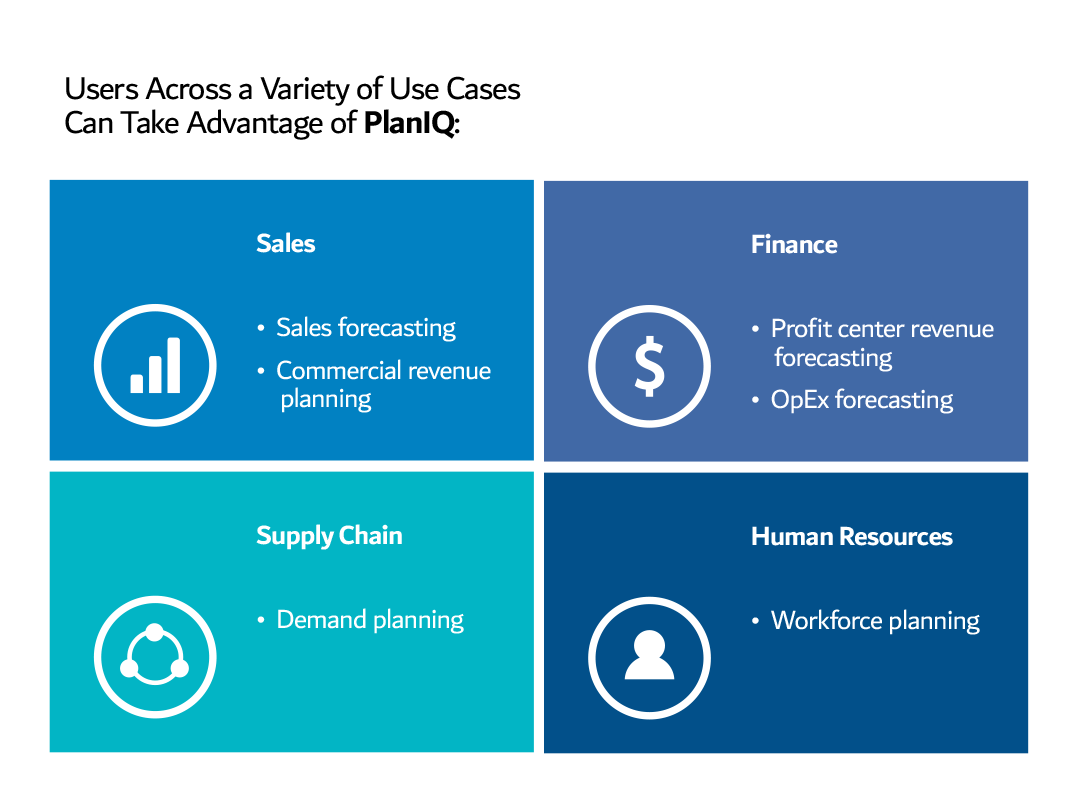
This technology allows teams across Finance, Supply Chain and Sales to generate highly accurate forecasts, quickly. The following diagram illustrates the different use cases of each business function and how they can leverage Anaplan’s PlanIQ platform to generate strategic organization-wide value.
Key forecasting capabilities of PlanIQ within Anaplan include:
The impact of implementing such intelligent forecasting is substantial. Research indicates that ML or statistical-based forecasts deliver accuracy equal to or greater than human experts in 70% of cases (Source: Anaplan PlanIQ Solution Brief).
Anaplan cites cases where forecast accuracy improved by up to 50%, depending on the use case and baseline process. This forecast accuracy improvement can support better inventory decisions, reduced waste, and faster operational responses.
For a Malaysian business, this means:
As the global economic landscape remains unpredictable, the ability to nimbly anticipate change is no longer a luxury but a necessity for maintaining a competitive edge.
By leveraging the scenario planning in Anaplan, strengthened by PlanIQ’s intelligent forecasting capabilities, Malaysian enterprises can confidently respond more confidently to global trade volatility and make faster, better-informed margin decisions.
The closure of the Strait of Hormuz in March 2026 created an immediate global supply shock, stalling 20% of the world’s oil and gas and rapidly eroding industrial margins in Malaysia. Traditional manual forecasting tools have proven inadequate for such volatile shifts, often leaving Malaysian enterprises vulnerable as they struggle to re-forecast from scratch using outdated historical data.
To combat this ‘Hormuz Ripple Effect,’ businesses are adopting Metora FP&A and Anaplan PlanIQ to strengthen scenario planning with intelligent forecasting. Anaplan combines planning models for multi-dimensional scenario analysis with PlanIQ for intelligent forecasting, helping teams react faster to disruptions. By integrating external trade drivers and allowing for ad-hoc analysis, decision-makers can react instantly to geopolitical disruptions rather than relying on reactive, slow-moving traditional methods.
The implementation of these intelligent forecasts significantly protects bottom lines with cases showing forecast accuracy improvements by up to 50%, depending on the use case and baseline process. For Malaysian firms, this results in optimised supply chains, reduced waste and enhanced financial agility. By maintaining a single source of truth within a Connected Planning environment, enterprises can turn volatility into more informed, data-driven planning and stronger decision-making.
Invest in Metora’s Scenario Planning and FP&A solutions to overcome the Hormuz ripple effect and more. Get in touch.