Beyond the Reforecast Cycle: How AI-Powered Connected Planning Helps Reduce Margin Leakage
Why Slow Reforecast Cycles are Costing Enterprises Margin and Agility
In today’s volatile enterprise landscape, cost pressure is an absolute constant. Yet, the corporate mechanisms used to combat it remain dangerously archaic. Most organizations continue to navigate market disruptions through a rearview mirror, relying on traditional monthly or quarterly reforecast cycles.
When supply chains fray, currency values swing or sudden operational bottlenecks emerge, waiting weeks for the next formal forecast cycle is no longer a viable option. It creates a critical vulnerability. Enterprise leaders are trapped in a reactive paradigm where they must either wait out the cycle-rapidly increasing the risk of margin leakage-or enforce blunt, sweeping cost reductions. These blind cuts frequently stall growth, paralyse ongoing delivery schedules and degrade long-term client service levels.
True cost agility is not about cutting expenditure indiscriminately. Instead, it represents the ability of an organization to control and optimise costs dynamically without sacrificing execution velocity or organizational momentum. Achieving this posture requires shifting away from fragmented, static budgets toward a unified, driver-based planning ecosystem powered by Artificial Intelligence (AI) enabled Connected Planning.
The Invisible Drain: Why Disconnected Planning Fails Executives
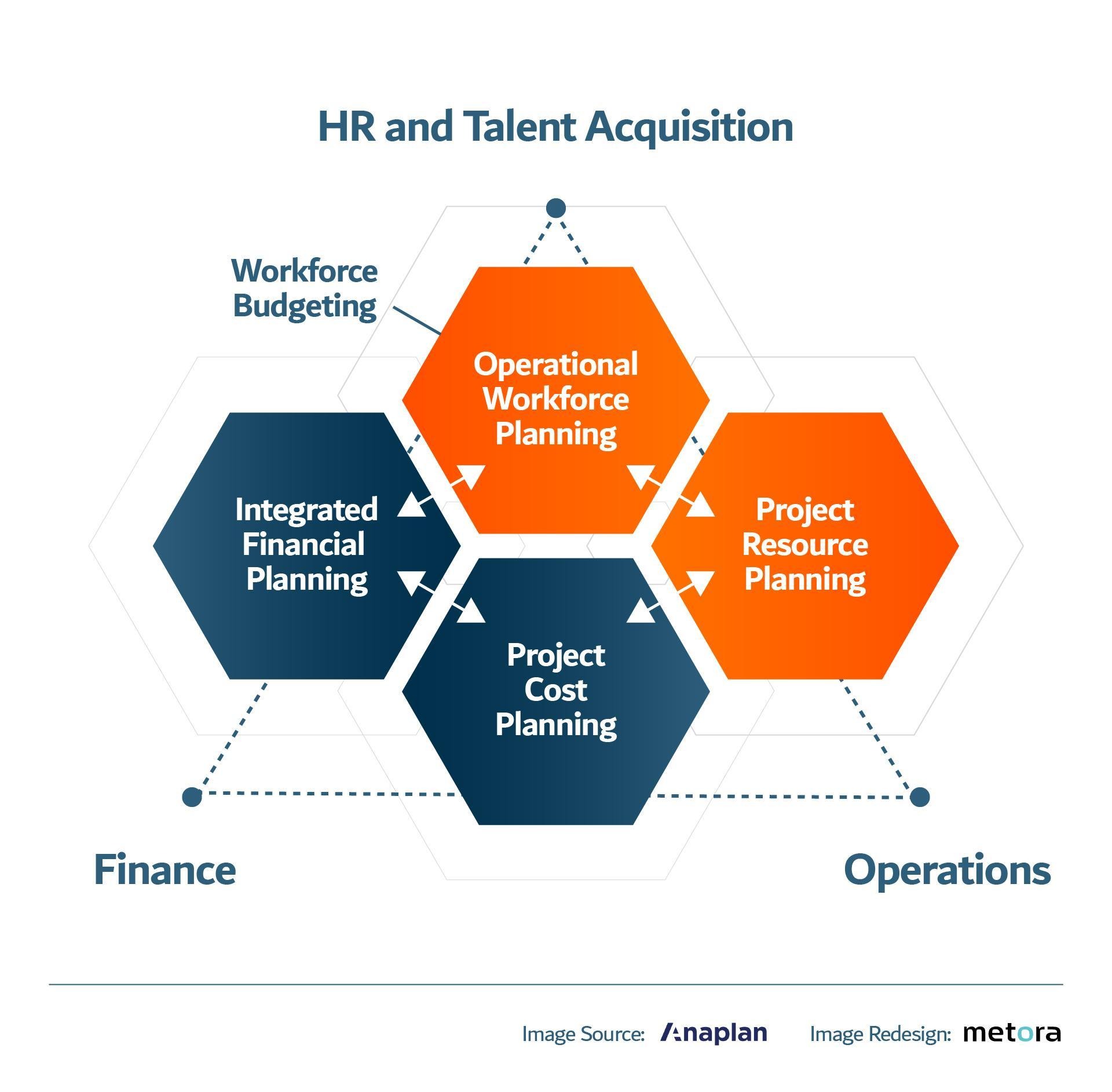
CEOs, CFOs, and COOs face a fundamental operational challenge: major corporate expenditures are structurally siloed. Finance, Human Resources and Operations typically build, maintain and update their plans in total isolation, utilising heavily customised, disconnected spreadsheets.
This architectural fragmentation triggers three highly damaging consequences across the enterprise:
The Strategy-Execution Gap: Strategic cost-containment mandates delivered by executive leadership fail to translate accurately into day-to-day operational logic. Middle management lacks the immediate operational visibility required to align local choices with top-down corporate margins.
Delayed Variance Visibility: Because information must be manually extracted, normalised and consolidated across business units, a massive time lag occurs. By the time an unfavourable variance in workforce utilisation, project spending or IT vendor commitments is identified in a spreadsheet, the capital has already exited the enterprise.
Blind, Uncoordinated Trade-offs: Corporate decision-makers lack the cross-functional modelling capabilities needed to see how an operational tweak in one department alters upstream or downstream outcomes. For example, a sudden operational decision within HR to freeze specific talent pipelines can inadvertently cripple an operational unit's capability to deliver a high-margin client project on schedule, ultimately eroding net profitability.
Executive Reality Check: The Financial Fallout of Lag Time
When planning cycles take 14 to 21 days to consolidate, cost tracking is permanently historical. Margin leakage occurs silently in the gaps between what was budgeted, what is currently happening on the ground and when finance finally observes the variance.
The Solution: Connected Planning as an Agile Operating System
To break this cycle, enterprise planning must evolve from an episodic corporate administrative event into a continuous operational rhythm. This is achieved by implementing a Connected Planning operating system like Anaplan, establishing a single, shared source of operational and financial truth across all departments.
Metora, a leading Anaplan Partner in Malaysia, offers organizations across the world with Connected Planning solutions that are dynamic and insight driven. Metora’s approach focuses on mapping real-world operational cost drivers directly to the core financial statement architecture. Instead of managing fixed line items, the system treats variables as mathematical inputs where a shift in operational metrics automatically updates the entire corporate forecast.
By integrating AI-enabled predictive capabilities and rapid multi-scenario modelling into this system, leaders gain the ability to look forward with clarity. Executives can run multiple, highly complex scenarios simultaneously-such as a sudden regional demand drop, an unexpected inflationary cost hike, a targeted hiring freeze or a vendor consolidation drive-and compare the side-by-side impacts on cash flow, capacity and margin more quickly. This capability allows teams to compare options side by side and make more informed decisions with greater confidence before costs are committed.
The Blueprint in Action: 3 Practical High-Impact Use Cases
To demonstrate how this architecture operates in practice, let us examine how a Connected Planning operating system optimises the 3 largest, most controllable, yet traditionally the most difficult-to-manage cost centres in the modern enterprise.
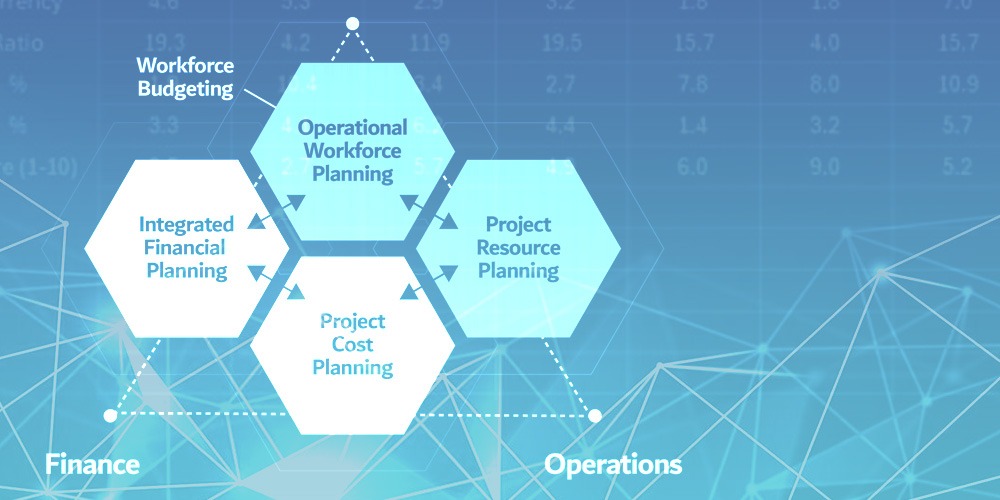
Use Case 1: Integrated Financial Planning & Workforce Budgeting
The Challenge: Headcount and total compensation represent an organization’s largest operational expense. Yet, hiring plans, turnover, internal mobility, position changes, and workforce costs are rarely calibrated in real-time against fluctuating market demand.
The Connected Approach: By linking HR operational data (hiring, turnover, internal mobility, position costs, and skills) directly into the financial forecast, human capital scales dynamically alongside operational realities.
The Scenario Outcome: If a localised market downturn occurs, leaders do not need to issue a company-wide freeze. Instead, they can run automated scenario models to conduct a comparison between targeted hiring deferrals, role changes or alternative staffing scenarios. The platform reveals the exact bottom-line impact more quickly, allowing leadership to maintain operational capacity while protecting group margins.
Use Case 2: Project Resource Planning & Capacity Trade-offs
The Challenge: Strategic initiatives and client projects routinely encounter margin erosion due to uncoordinated resource allocation, unexpected skill shortages and an over-reliance on premium third-party contractors to plug sudden operational gaps.
The Connected Approach: Metora integrates project demand from PPM, CRM and other sources, real-time talent utilisation matrices and explicit skills inventories directly into the financial planning core.
The Scenario Outcome: When specialised delivery resources face constraints, executives can simulate cross-functional trade-off scenarios on the fly. The system helps evaluate trade-offs between cost, timeline, resource allocation, utilisation and profitability. This eliminates blind reallocations and ensures internal resource utilisation is maximised before expensive external contractor spend is authorised.
Use Case 3: IT Spend Optimisation & Vendor Consolidation
The Challenge: Enterprise software licensing, decentralised cloud consumption and rolling maintenance contracts are frequently scattered across various regional entities and IT infrastructures, resulting in duplicate software vendor spend and unexpected, unbudgeted true-up penalties.
The Connected Approach: Enterprise-wide contract renewal timelines, subscription tiers and actual system utilisation metrics are integrated cleanly into the financial planning engine.
The Scenario Outcome: By linking renewal timelines, license tiers, vendor commitments and actual utilisation into one planning model, finance and IT teams can identify overlaps earlier and compare consolidation options side by side. Finance and IT leaders can simulate consolidation scenarios side-by-side, evaluating the exact cost reduction of migrating legacy users to centralised enterprise agreements. This transforms IT procurement from a reactive renewal exercise into an active, proactive margin recovery mechanism.
The Business Outcome: Protected Profitability and Clear Accountability
Transitioning to an AI-powered Connected Planning framework delivers clear structural advantages that redefine how an enterprise operates:
Velocity Over Volume: The business shifts away from gruelling, weeks-long manual consolidation cycles toward immediate, daily operational responsiveness. Reforecasting becomes faster and more operationally responsive to changing business conditions.
Data-Driven Accountability: Because all financial targets are directly linked to visible operational drivers, departmental managers and corporate finance teams work from a single source of planning truth. This eliminates arbitrary variance debates and aligns teams entirely on execution numbers.
Insulated Profitability: Leaders gain a proactive mechanism to safeguard corporate net margins. By identifying and visualising the financial ripple effects of operational choices beforehand, the corporate cost structure is transformed from a rigid bottleneck into a source of competitive agility.
Key Takeaways
In a corporate landscape defined by continuous macroeconomic shifts, cost agility is no longer an operational luxury-it is the baseline requirement for sustained enterprise profitability. Accepting a multi-week information lag to identify margin leakage is an operational risk that modern business leaders no longer have to tolerate.
By transforming your planning architecture from static, siloed spreadsheets into a dynamic, connected operating system, you empower your executive team to protect margins proactively, optimize critical resource allocation, and drive sustainable corporate growth with absolute clarity.
Ready to eliminate enterprise margin leakage and transition to real-time scenario modeling? Get in touch to leverage Metora’s industry leading AI powered Connected Planning solutions today.
Blog
Take the first step on your digital transformation journey and book a discovery call with us!
Unit 21-12, Q Sentral, 2A, Jalan Stesen Sentral 2, Kuala Lumpur Sentral, 50470 Kuala Lumpur
By using this website, you agree to the storing of cookies on your device to enhance site navigation, analyze site usage, and assist in our marketing efforts. View our Privacy Policy for more information.